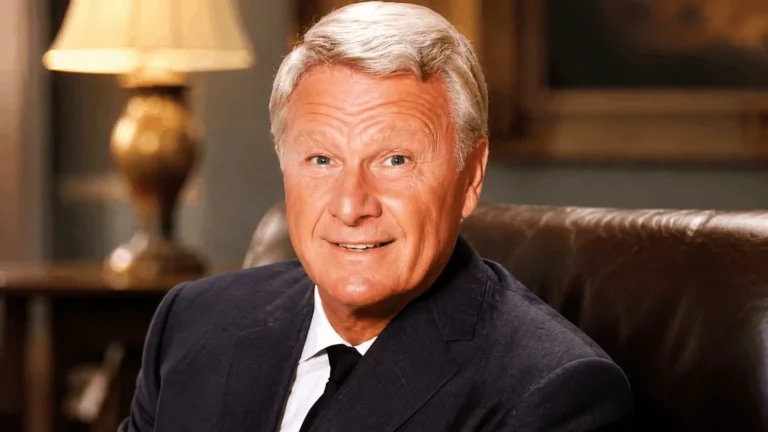
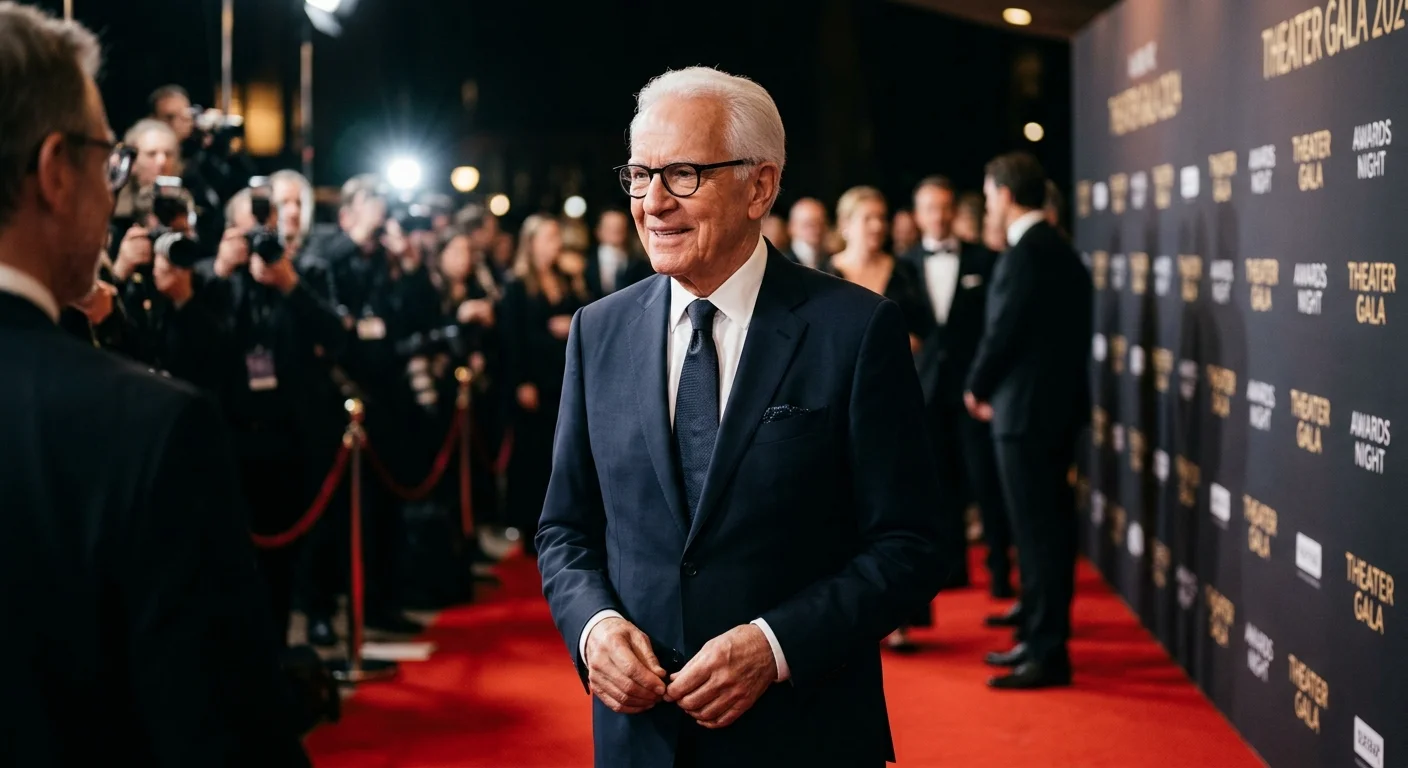
F. Murray Abraham is an American actor best known for winning the 1985 Academy Award for Best Actor as Antonio Salieri in “Amadeus,” a role that turned a journeyman stage performer into a household name almost overnight. Since then, he has built one of the more unusual careers in American acting: an Oscar winner who went years without steady film work, then rebuilt himself into a fixture of prestige television with roles in “Homeland,” “The White Lotus,” “Mythic Quest,” and “Moon Knight.”
Born on October 24, 1939, in Pittsburgh and raised in El Paso, Texas, Abraham has spent more than sixty years moving between Broadway, film sets, and television soundstages. His story is less a straight line to stardom than a series of comebacks, and that pattern is part of what still makes him interesting to casting directors and audiences today.
A Childhood in El Paso, Not Hollywood
Abraham’s path to acting did not start with any obvious advantage. His father worked as an auto mechanic and his mother was a homemaker, and by his own account, he spent part of his teenage years running with a rough crowd in El Paso. What changed the direction of his life was ordinary and almost accidental: a high school drama teacher noticed something in him and pushed him to perform in front of his class. That single nudge sent him toward theater instead of trouble, and he has credited it as the turning point that shaped everything afterward.
He studied at the University of Texas at El Paso before eventually making his way to New York, where he spent years working small roles off-Broadway while barely scraping by. Long before any major film credit, his New York debut was as a Macy’s Santa Claus, a detail that captures just how far he was from stardom in those early years.
Building a Career in the Shadows of Bigger Names
Abraham’s film resume through the 1970s reads like a list of blink-and-you-miss-him parts in major movies: “Serpico” (1973) and “All the President’s Men” (1976) both used him in small supporting roles. He also appeared alongside Al Pacino in “Scarface” (1983) as the drug dealer Omar Suárez, another film where he was present but not yet central. During this stretch, work was inconsistent enough that his wife, actress Kate Hannan, took a job to support the family while Abraham handled housework and child care. He later described that period candidly, saying the arrangement was hard on his sense of himself as a provider but ended up being one of the best things that happened to him.
That kind of stop-start career, mixing off-Broadway ambition with unglamorous film work, is the backdrop that makes his eventual Oscar win land as such a sharp turn rather than a predictable next step.
Amadeus and the Weight of Winning Too Big, Too Fast
In 1984, director Miloš Forman cast Abraham as Antonio Salieri in “Amadeus,” the story of a court composer consumed by envy of Wolfgang Amadeus Mozart. The performance won Abraham the Academy Award for Best Actor in 1985, along with a Golden Globe and an award from the Los Angeles Film Critics Association. Tom Hulce, who played Mozart in the same film, was also nominated that year, which made the win feel even more significant within the industry.
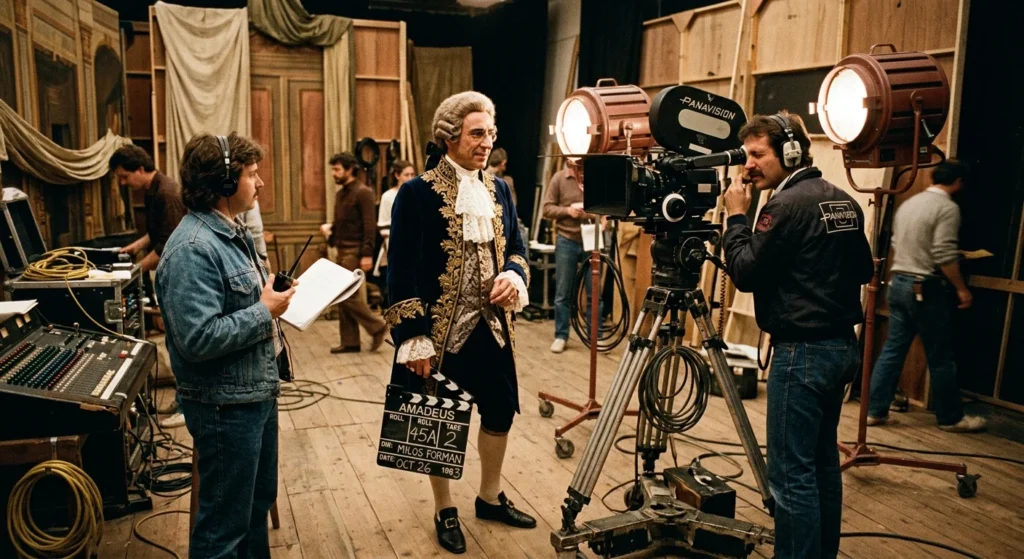
The award should have opened doors, and in some ways it did. But Abraham has been unusually honest about what happened next: he has said that winning made him full of himself, and that he grew choosier about roles at exactly the wrong moment in his career. He started turning down parts, and the offers slowed. It is a rare admission from an actor at his level, and it reframes the Oscar less as a finish line and more as a complication he had to work his way through.
Character Actor Years: Steady Work Away From the Spotlight
Through the late 1980s, 1990s, and 2000s, Abraham became the kind of performer directors reach for when a film needs gravity in a supporting role. He played Bernardo Gui in “The Name of the Rose” (1986), appeared in “Last Action Hero” (1993), took a role in “Star Trek: Insurrection” (1998), and later showed up in “Finding Forrester” (2000). He also spent years narrating the PBS wildlife series “Nature,” work that kept him visible without requiring him to carry a film.
Theater remained a constant throughout this stretch, and arguably mattered more to him than film did. He has appeared in more than 90 stage productions, including “Uncle Vanya,” for which he won an Obie Award, and a 2011 production of “The Merchant of Venice” that earned him a second Obie. His Broadway credits stretch back to 1968’s “The Man in the Glass Booth,” and he later appeared in the 2014 revival of “It’s Only a Play,” earning a Drama Desk Award nomination.
A Late-Career Second Wind on Television
Abraham’s career took another notable turn in the 2010s and 2020s, this time driven by television rather than film. He joined Showtime’s “Homeland” as CIA operative Dar Adal in 2011, a recurring role that ran through the series’ end in 2018 and earned him two Primetime Emmy nominations for Outstanding Guest Actor in a Drama Series. Around the same period, he had a recurring role on “The Good Wife” (2009 to 2016).
The role that introduced him to a newer, younger audience came in 2022, when he played Bert Di Grasso, a chauvinistic Italian American grandfather, in the second season of HBO’s “The White Lotus.” The part earned him nominations for both a Golden Globe and a Primetime Emmy for Outstanding Supporting Actor in a Drama Series. That same year, he voiced the Egyptian god Khonshu in Disney Plus’s “Moon Knight,” a performance that brought him an Emmy nomination in a completely different register from prestige drama. He also had a recurring part in Apple TV Plus’s workplace comedy “Mythic Quest,” playing a game studio writer, which showed off a comic side of his acting that his film career had rarely used.
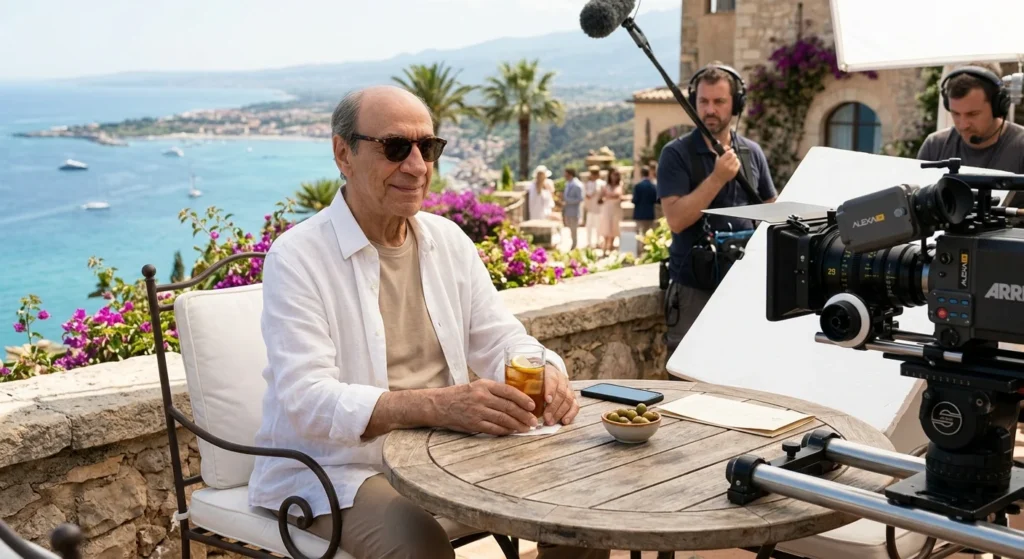
Speaking with NPR’s “Fresh Air” about this stretch of his career, Abraham said he took real pleasure in hearing his recent work described back to him, calling it something he genuinely enjoyed. The comment fits a pattern in how he talks about his career: less concerned with prestige for its own sake, more focused on staying working and being taken seriously as a craftsman.
What Abraham Is Working On Now
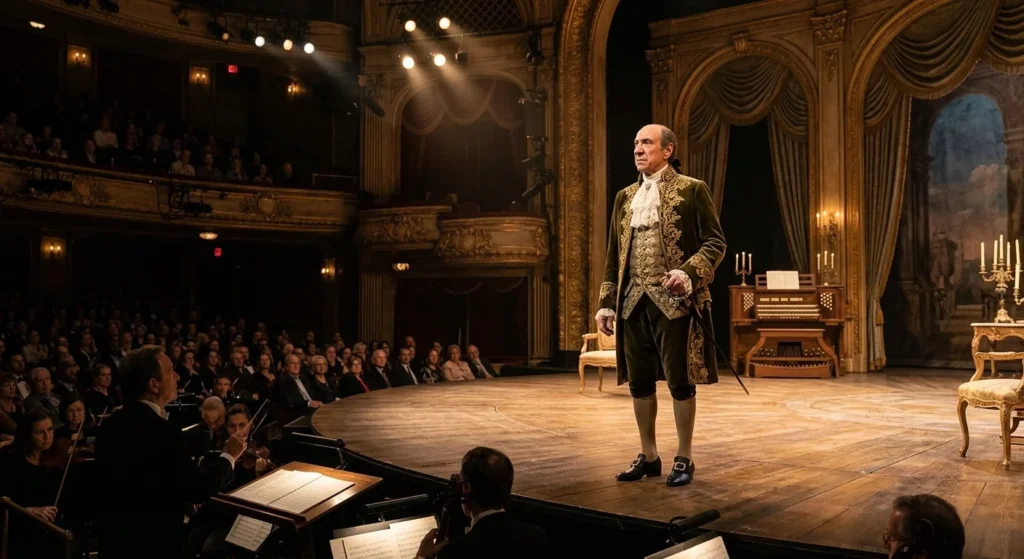
Abraham has not slowed down into his mid-eighties. On Broadway, he currently appears in “The Queen of Versailles,” a new musical starring Kristin Chenoweth, playing the character David alongside a cast that also includes Melody Butiu and Stephen DeRosa. In June 2026, he joined Shereen Ahmed and Melissa Errico for a concert staging of “My Fair Lady” as part of the Irish Repertory Theatre’s annual gala at Town Hall in New York.
On film, he has a role in “Out of This World,” director Albert Serra’s English-language debut starring Riley Keough, which was shot on location in Latvia and is expected to reach American audiences in 2026. He also joined the cast of “Bookends” alongside Caroline Aaron, another project that kept him working through 2025 and into 2026. Between the stage commitments and the film work, Abraham’s schedule reads more like an actor in the middle of his career than one near the end of it.
Why His Career Still Holds Up as a Case Study
What sets Abraham apart from many actors who peak early is that he never treated the Oscar as the ceiling. He has spoken openly about the mistakes that followed his win, which is unusual candor from someone at that level of recognition, and he used decades of smaller stage and screen work to rebuild rather than coast. His filmography now spans more than 80 films and his stage work covers more than 90 productions, a body of work built as much on persistence as on any single standout role.
For students of the entertainment industry, Abraham’s trajectory is a useful counterexample to the idea that a career peaks with an Academy Award. His resurgence through “Homeland,” “The White Lotus,” “Moon Knight,” and now new film and stage projects shows that character actors with real range can find new audiences at almost any age, provided they keep taking the work seriously.