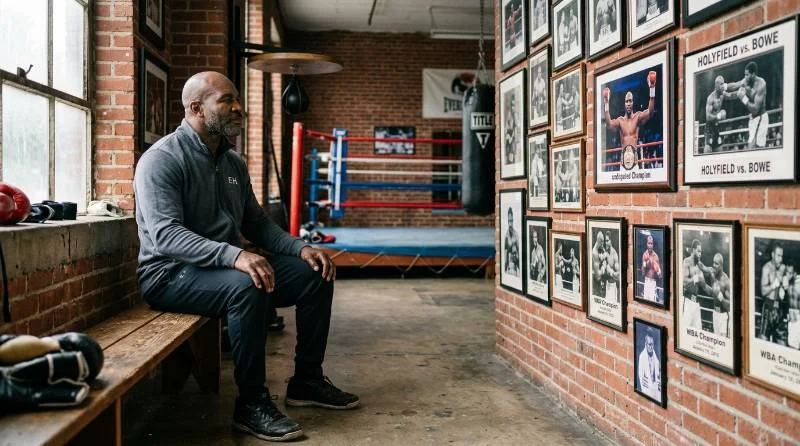
Evander Holyfield’s net worth is estimated at $1 million in 2026, according to Celebrity Net Worth, a striking figure for a man who earned roughly $230 million across a 26-year boxing career. Holyfield was born on October 19, 1962, in Atmore, Alabama, which puts him at 63 years old. He stands 6 feet 2.5 inches tall and made his fortune as a professional boxer, becoming the only fighter to hold the undisputed championship in two separate weight classes.
Quick Facts
| Category | Details |
| Full Name | Evander Holyfield |
| Nickname | The Real Deal |
| Net Worth | $1 million (2026 estimate) |
| Date of Birth | October 19, 1962 |
| Age | 63 |
| Birthplace | Atmore, Alabama |
| Height | 6 ft 2.5 in (189 cm) |
| Occupation | Former professional boxer |
| Career Span | 1984 to 2011 |
| Career Earnings | Approximately $230 million |
| Marriages | 3 |
| Children | 11 |
Early Life & Biography
Holyfield grew up in the Bowen Homes housing project in Atlanta after his family relocated from Atmore, Alabama. Money was tight throughout his childhood, and he started boxing at age seven at a local Boys Club, where he quickly stood out against older, bigger opponents. By his teenage years, he had already won regional titles and built an amateur record most fighters never approach in a full career.
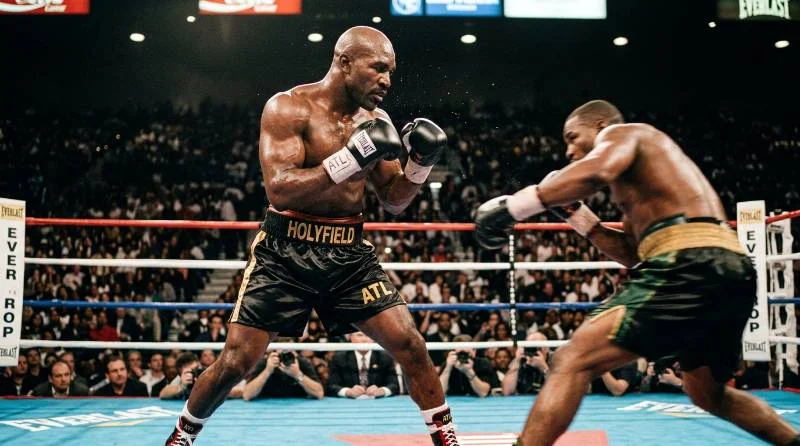
His amateur run peaked at the 1984 Los Angeles Olympics, where he won a bronze medal in the light heavyweight division after a controversial disqualification in the semifinal. That disqualification became a launching pad rather than a setback. Within months, Holyfield turned pro and began the climb that would eventually make him one of the highest-paid athletes of his era.
Career Timeline
Holyfield turned professional in November 1984 and spent his early years cleaning out the cruiserweight division. By 1988 he had unified the WBA, IBF, and WBC cruiserweight belts, making him the division’s first undisputed champion. He then moved up to heavyweight, a jump few cruiserweights survive against bigger punchers.
The heavyweight run is what built his fortune and his legend. He knocked out Buster Douglas in the third round on October 25, 1990, to claim the undisputed heavyweight title. Over the next decade, he traded the belt through a series of career-defining fights against George Foreman, Riddick Bowe, Michael Moorer, and Lennox Lewis.
His two bouts with Mike Tyson remain the most talked-about fights of his career. Holyfield won the first meeting by technical knockout in November 1996, and the 1997 rematch became infamous when Tyson bit a piece off his ear, an incident that still gets referenced whenever the two men’s names come up together. That single rematch alone paid Holyfield an estimated $34 million.

Holyfield fought on well past his prime, chasing bigger paydays as his skills declined and his finances worsened. He retired in June 2014 with a professional record of 44 wins, 10 losses, and 2 draws, 29 of those wins by knockout across 57 fights.
Net Worth Breakdown
The gap between what Holyfield earned and what he has now is the reason people keep searching his name alongside “net worth.” Estimates of his career prize money land between $230 million and $250 million before taxes, trainers, management fees, and living expenses. Celebrity Net Worth, the most frequently cited tracker for his finances, currently places his net worth at $1 million, a figure that has held roughly steady across the last several years of its updates. A few smaller outlets cite figures as low as $500,000, but none of them show independent reporting behind the number, so the $1 million estimate is the one worth treating as the reference point.
Several factors explain the collapse. Holyfield lost his 109-room, 54,000-square-foot Fayette County, Georgia mansion to foreclosure in 2008 after falling behind on a $10 million mortgage. Rapper Rick Ross later bought the property. Child support obligations for his eleven children, three divorce settlements, and years of continuing to fight past his physical peak for diminishing purses all chipped away at what remained. Holyfield has spoken publicly about not having a financial team in place during his peak earning years, which left him without the kind of long-term planning that protects other high-earning athletes.
Boxing income also arrives in an unusual pattern compared to most careers. A single fight night can pay more than most people earn across a decade, but the gaps between those nights come with ongoing expenses: training camps, a large support staff, insurance, and travel that don’t stop just because the paydays do. When Holyfield kept fighting into his late forties, it was in large part to keep that income flowing, even as ticket sales and pay-per-view numbers for his fights shrank. Analysts who track athlete finances point to Holyfield’s story as one of the clearest examples of how quickly a nine-figure fortune can shrink when spending, legal costs, and family obligations outpace new earnings for years at a time.
Income Sources
Fight purses made up the overwhelming majority of Holyfield’s wealth. His biggest single payday, the 1997 Tyson rematch, alone outpaced what most professional athletes make across an entire career. Pay-per-view revenue sharing on his biggest bouts against Tyson, Bowe, and Lewis added tens of millions more on top of guaranteed purses.
Outside the ring, Holyfield built a modest secondary income stream through endorsements and business ventures, though nothing close to what his fight purses generated. He was a spokesperson for Coca-Cola and Diet Coke in the early 1990s at the height of his fame. In 2007, he launched the Real Deal Grill, a countertop cooking appliance sold through infomercials, and he appeared in advertisements for the Zaxby’s restaurant chain around the same period. A licensed boxing video game, Evander Holyfield’s Real Deal Boxing, was released for the Sega Genesis and Game Gear in the early 1990s and added a smaller royalty stream.
Since retiring, Holyfield has earned money through appearance fees, boxing commentary, brand ambassador work, and occasional business ventures tied to his name, though none of it approaches his in-ring earnings. He has also worked as a boxing advisor and mentor to younger fighters, which provides steady if modest income today.
He also launched Real Deal Records in 1999, a music label connected to his “Real Deal” nickname, and has taken small acting and television roles over the years, including an early appearance on The Fresh Prince of Bel-Air and a later animated cameo on Nickelodeon’s GUTS that referenced his bitten ear. None of these ventures generated anywhere near the income his boxing purses did, and most industry watchers describe them as reputation-driven side projects rather than major revenue streams.
Family
Holyfield has been married three times. He married Paulette Bowen in 1985, and the couple had three children together before divorcing in 1991, with Paulette receiving a reported $4 million settlement. He married Janice Itson in 1996, and that marriage ended in divorce by 1999. His third marriage, to Candi Calvana Smith in 2003, lasted the longest of the three at roughly a decade before ending in divorce in 2012 following a domestic dispute that led to a restraining order.
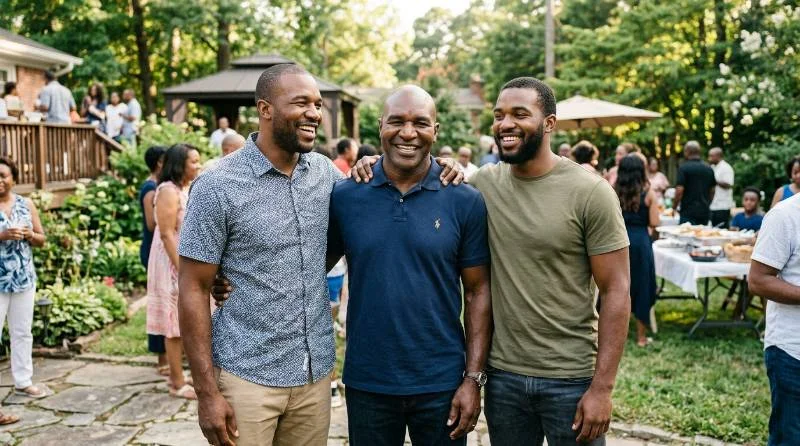
Across those three marriages and additional relationships, Holyfield fathered eleven children, six boys and five girls, and gave every one of them a name starting with the letter E. Two of his sons have followed him into professional sports: Elijah Holyfield played running back in the NFL, and Evan Holyfield became a professional boxer in his own right. Ongoing child support obligations for his large family have been repeatedly cited as one of the drains on his finances, and Holyfield has previously sought to have some of those payments reduced.
Physical Stats
Holyfield fought at a height of 6 feet 2.5 inches (189 cm), which is average for a modern heavyweight but was often a disadvantage against taller opponents like Lennox Lewis. His fighting weight generally sat between 208 and 220 pounds during his prime heavyweight years, allowing him to move faster than most of the bigger punchers he faced. That combination of conditioning, footwork, and a punishing work rate is what let him compete with, and often beat, opponents who outsized him.
Holyfield’s boxing style leaned heavily on stamina and pressure rather than raw power, which is part of why he was able to fight at a competitive level well into his forties, even if his later fights drew criticism for going on too long.